Pulseboard S3
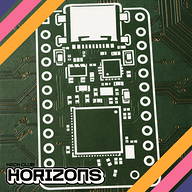
This is an ESP32 S3 Devboard, designed to be used in conjunction with EMGs and EKGs. As with all ESP32S3 Devboards, it has WiFi and Bluetooth capibilities.
Created by
 avidgamer
Tier 3
8 views
0 followers
avidgamer
added to the journal ago
Soldered the first PCB
Using the PCB hotplate that I ordered (which finally arrived) I put on the components for the first of my devboards. It took a decent bit of time, because I had never done SMD soldering before, and I have to use the copper braid to remove the extra paste and retry to solder it on several times more than I'd like to admit.
 CAN ⚡🚀
approved Pulseboard S3 ago
CAN ⚡🚀
approved Pulseboard S3 ago
Tier approved: 3
Grant approved: $83.00
Nice project
avidgamer
submitted Pulseboard S3 for ship review ago
 PenguinMo
requested changes for Pulseboard S3 ago
PenguinMo
requested changes for Pulseboard S3 ago
There has to be some way to reduce the price, think out of the box
avidgamer
submitted Pulseboard S3 for ship review ago
avidgamer
added to the journal ago
Finished Silkscreens
I finished up moving the silkscreens for the component labeling, and adding art to the front and back. I plan on using this board with some medical sensors, so I leaned into the medical theme.


avidgamer
added to the journal ago
Finished Fixing Errors
It took a lot of time searching through documentation and looking up errors, but I managed to bring the errors down from 96 to 0. I also solved schematic parity and the unconnected items problems as well!

avidgamer
added to the journal ago
Finished Routing + Began Fixing Errors
I finally finished routing and filled in the filled zones on Layers 1, 2, and 3.

The problem is that when I ran the Design Rules checker, I got a lot of errors, so I am gonna be working on fixing those shortly.

avidgamer
added to the journal ago
Continued routing + Added filled zones
I have been working for quite a bit since my last journal, and I wanted to add another entry, even though I haven't reached any sort of stopping point. But basically I have routed about half of the GPIOs. I also added two filled zones on layer 2 and layer 3, just for convenience and for the data lines to get to around 90 ohms of impedance.

avidgamer
added to the journal ago
Started routing
After a lot of looking at documentation, I finally managed to connect the data lines using JLCPCB's impedance calculator. I ultimately went with a 4 layer PCB design (non coplanar), because getting to 90 ohms with a coplanar design was making me unable to use all of the ESP32's GPIOS.

avidgamer
added to the journal ago
Changed Switch Footprint
The footprints for the reset and boot switches didn't match the part, so I changed the footprints in the footprint editor to match the footprint for the part (1122->1234).


avidgamer
added to the journal ago
Finished Schematic Design
I looked through the datasheets of all the parts I wanted to use, and started looking through what mass produced ESP32S3 Devboards have and what I need to add/remove to adapt it to my use.
My final schematic looked like this:

avidgamer
added to the journal ago
ESP32 Variant Selection and Initial Schematic
After looking through documentation, I decided on an ESP32 S3. This is because it is easy to work with and does what I need it to do. I want it to be smaller than the size of a normal ESP32 Devboard, and I want it to have the Bluetooth and Wifi all ESP32s have. I don't care too much about extra features, but I want to remove some stuff I don't need or use.
Main:
ESP32-S3-MINI-1
USB-C (Since I have more usb connecters than Micro USB ones)
TLV75801PDRV
D3V3XA4B10LP
Extras:
SPI LEDs (maybe)
USB LEDs (also maybe)
I am still thinking about what else would be good to add.

avidgamer
started Pulseboard S3 ago
12/9/2025 - ESP32 Variant Selection and Initial Schematic
After looking through documentation, I decided on an ESP32 S3. This is because it is easy to work with and does what I need it to do. I want it to be smaller than the size of a normal ESP32 Devboard, and I want it to have the Bluetooth and Wifi all ESP32s have. I don't care too much about extra features, but I want to remove some stuff I don't need or use.
Main:
ESP32-S3-MINI-1
USB-C (Since I have more usb connecters than Micro USB ones)
TLV75801PDRV
D3V3XA4B10LP
Extras:
SPI LEDs (maybe)
USB LEDs (also maybe)
I am still thinking about what else would be good to add.
12/10/2025 5 PM - Finished Schematic Design
I looked through the datasheets of all the parts I wanted to use, and started looking through what mass produced ESP32S3 Devboards have and what I need to add/remove to adapt it to my use.
My final schematic looked like this:
12/10/2025 8 PM - Changed Switch Footprint
The footprints for the reset and boot switches didn't match the part, so I changed the footprints in the footprint editor to match the footprint for the part (1122->1234).
12/13/2025 6 PM - Started routing
After a lot of looking at documentation, I finally managed to connect the data lines using JLCPCB's impedance calculator. I ultimately went with a 4 layer PCB design (non coplanar), because getting to 90 ohms with a coplanar design was making me unable to use all of the ESP32's GPIOS.
12/13/2025 9 PM - Continued routing + Added filled zones
I have been working for quite a bit since my last journal, and I wanted to add another entry, even though I haven't reached any sort of stopping point. But basically I have routed about half of the GPIOs. I also added two filled zones on layer 2 and layer 3, just for convenience and for the data lines to get to around 90 ohms of impedance.
12/14/2025 10 AM - Finished Routing + Began Fixing Errors
I finally finished routing and filled in the filled zones on Layers 1, 2, and 3.
The problem is that when I ran the Design Rules checker, I got a lot of errors, so I am gonna be working on fixing those shortly.
12/14/2025 2 PM - Finished Fixing Errors
It took a lot of time searching through documentation and looking up errors, but I managed to bring the errors down from 96 to 0. I also solved schematic parity and the unconnected items problems as well!
12/14/2025 4 PM - Finished Silkscreens
I finished up moving the silkscreens for the component labeling, and adding art to the front and back. I plan on using this board with some medical sensors, so I leaned into the medical theme.
2/11/2026 - Soldered the first PCB
Using the PCB hotplate that I ordered (which finally arrived) I put on the components for the first of my devboards. It took a decent bit of time, because I had never done SMD soldering before, and I have to use the copper braid to remove the extra paste and retry to solder it on several times more than I'd like to admit.