 wjschaible
gave kudos to gpu ago
wjschaible
gave kudos to gpu ago
What do you mean you made a gpu, dang man
 kwanyeung.chow1 🚀
gave kudos to gpu ago
kwanyeung.chow1 🚀
gave kudos to gpu ago
gpu
 malek2012osama
gave kudos to gpu ago
malek2012osama
gave kudos to gpu ago
you made what now
 Dodge1 🚀
added to the journal ago
Dodge1 🚀
added to the journal ago
research part 3
https://docs.google.com/spreadsheets/d/1Cx6SLtbQfrMjaOoha3WtSbsGnKbudi3LlXvoRu4ph1w/edit?gid=0#gid=0
compiled a document with info on all four of the main chips i have in mind right now. thinking of taking bitluni’s design, increasing each card by 4x and then adding more cards
take some chips ig

Dodge1 🚀
added to the journal ago
more research
it's been a bit of a while since the last devlog but i've tried to do a ton of research over that time to try to make the project more feasible software wise as well. right now flashing firmware still looks like it's going to be a big pain which is something that i think i will need to figure out when i get the board. the main change i want to highlight is the shift from a gpu towards a more clustered style board.
part 1: architecture
so i think i've figured out a general architecture on how i want the board to work. the plan is to have 16 modular slots where i can add different chips/designs i have. in addition, each one of these modules will not have 16 chips like i was initially thinking but to instead have 17. the reasoning here being that we have 16 compute chips and then 1 low power chip which contains information about the board and will send that to the main chip allowing for the computer to know what all the different modules are. this should also allow for me to make more modules and might even make it easier firmware which is something i am concerned about.
4 layer pcb. i'm concerned about going for 1 layer for power and one for gnd since that will take away a large portion of the area for traces. i do also need to stay within the bounds of the standard manufacturing for pcbs for stuff like traces and vias otherwise it will get very expensive.
part 2: chips
chip wise there's a few different considerations. i haven't fully decided on which chip i will be mainly using to communicate with all of the modules and the computer but that's what research is for ig. module wise my main comparison was initially between the esp32, stm32, and riscv. i have the most experience with the stm32 which does come out to being the best in terms of computing power/performance especially with the n6 for npu related tasks and h7 for general stuff. i am leaning towards the h7 however, i could easily make a configuration where i have two modules of n6's and six modules of h7's allowing for me to get the best of both worlds. the v8 is an upcoming upgrade to h7 but isn't out yet.
the esp32 does have bluetooth which i don't need for the modules but might be helpful for a secondary chip in tandem with the primary chip on the mainboard to make use of the peripherals. by contrast, riscv has an open architecture and is more suitable to clustering. it does have a lower price point that still gets you pretty good performance but you can also buy more expensive chips that might be better.

see i was pretty happy with this but then Kai mentioned that i might want to take a look at rockchip. rockchip manufacture mpus which would add extra complexity as i would also need to figure out how to work with the different chipsets above while still supporting them. now he specifically mentioned their RK3588 as it's pretty powerful and also accessible. the only problem is that they are expensive by itself but they are also currently out of stock. i instead looked a bit more and came upon the RK3576 which is half the price and still pretty powerful. at the same time, i realized the RK3588 might be a good option for the main chip to communicate with the computer if i got an interface working.
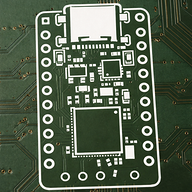 PenguinMo
gave kudos to gpu ago
PenguinMo
gave kudos to gpu ago
SIX SEVEN
 -JustACoder (Don't cuss around me pls) 🚀
gave kudos to gpu ago
-JustACoder (Don't cuss around me pls) 🚀
gave kudos to gpu ago
SIX SEVENN
Dodge1 🚀
added to the journal ago
research
started work on researching how to make my gpu with my main source being bitlui's video + github. it's a pretty awesome video so i would recommend checking it out.
i also spent some time looking at the schematic and pcb design behind it.
will likely be using risc-v's since they are cost effective yet powerful.
Dodge1 🚀
started gpu ago
10/4/2025 - research
started work on researching how to make my gpu with my main source being bitlui's video + github. it's a pretty awesome video so i would recommend checking it out.
i also spent some time looking at the schematic and pcb design behind it.
will likely be using risc-v's since they are cost effective yet powerful.
2/4/2026 - more research
it's been a bit of a while since the last devlog but i've tried to do a ton of research over that time to try to make the project more feasible software wise as well. right now flashing firmware still looks like it's going to be a big pain which is something that i think i will need to figure out when i get the board. the main change i want to highlight is the shift from a gpu towards a more clustered style board.
part 1: architecture
so i think i've figured out a general architecture on how i want the board to work. the plan is to have 16 modular slots where i can add different chips/designs i have. in addition, each one of these modules will not have 16 chips like i was initially thinking but to instead have 17. the reasoning here being that we have 16 compute chips and then 1 low power chip which contains information about the board and will send that to the main chip allowing for the computer to know what all the different modules are. this should also allow for me to make more modules and might even make it easier firmware which is something i am concerned about.
4 layer pcb. i'm concerned about going for 1 layer for power and one for gnd since that will take away a large portion of the area for traces. i do also need to stay within the bounds of the standard manufacturing for pcbs for stuff like traces and vias otherwise it will get very expensive.
part 2: chips
chip wise there's a few different considerations. i haven't fully decided on which chip i will be mainly using to communicate with all of the modules and the computer but that's what research is for ig. module wise my main comparison was initially between the esp32, stm32, and riscv. i have the most experience with the stm32 which does come out to being the best in terms of computing power/performance especially with the n6 for npu related tasks and h7 for general stuff. i am leaning towards the h7 however, i could easily make a configuration where i have two modules of n6's and six modules of h7's allowing for me to get the best of both worlds. the v8 is an upcoming upgrade to h7 but isn't out yet.
the esp32 does have bluetooth which i don't need for the modules but might be helpful for a secondary chip in tandem with the primary chip on the mainboard to make use of the peripherals. by contrast, riscv has an open architecture and is more suitable to clustering. it does have a lower price point that still gets you pretty good performance but you can also buy more expensive chips that might be better.
see i was pretty happy with this but then Kai mentioned that i might want to take a look at rockchip. rockchip manufacture mpus which would add extra complexity as i would also need to figure out how to work with the different chipsets above while still supporting them. now he specifically mentioned their RK3588 as it's pretty powerful and also accessible. the only problem is that they are expensive by itself but they are also currently out of stock. i instead looked a bit more and came upon the RK3576 which is half the price and still pretty powerful. at the same time, i realized the RK3588 might be a good option for the main chip to communicate with the computer if i got an interface working.
2/6/2026 - research part 3
https://docs.google.com/spreadsheets/d/1Cx6SLtbQfrMjaOoha3WtSbsGnKbudi3LlXvoRu4ph1w/edit?gid=0#gid=0
compiled a document with info on all four of the main chips i have in mind right now. thinking of taking bitluni’s design, increasing each card by 4x and then adding more cards
take some chips ig